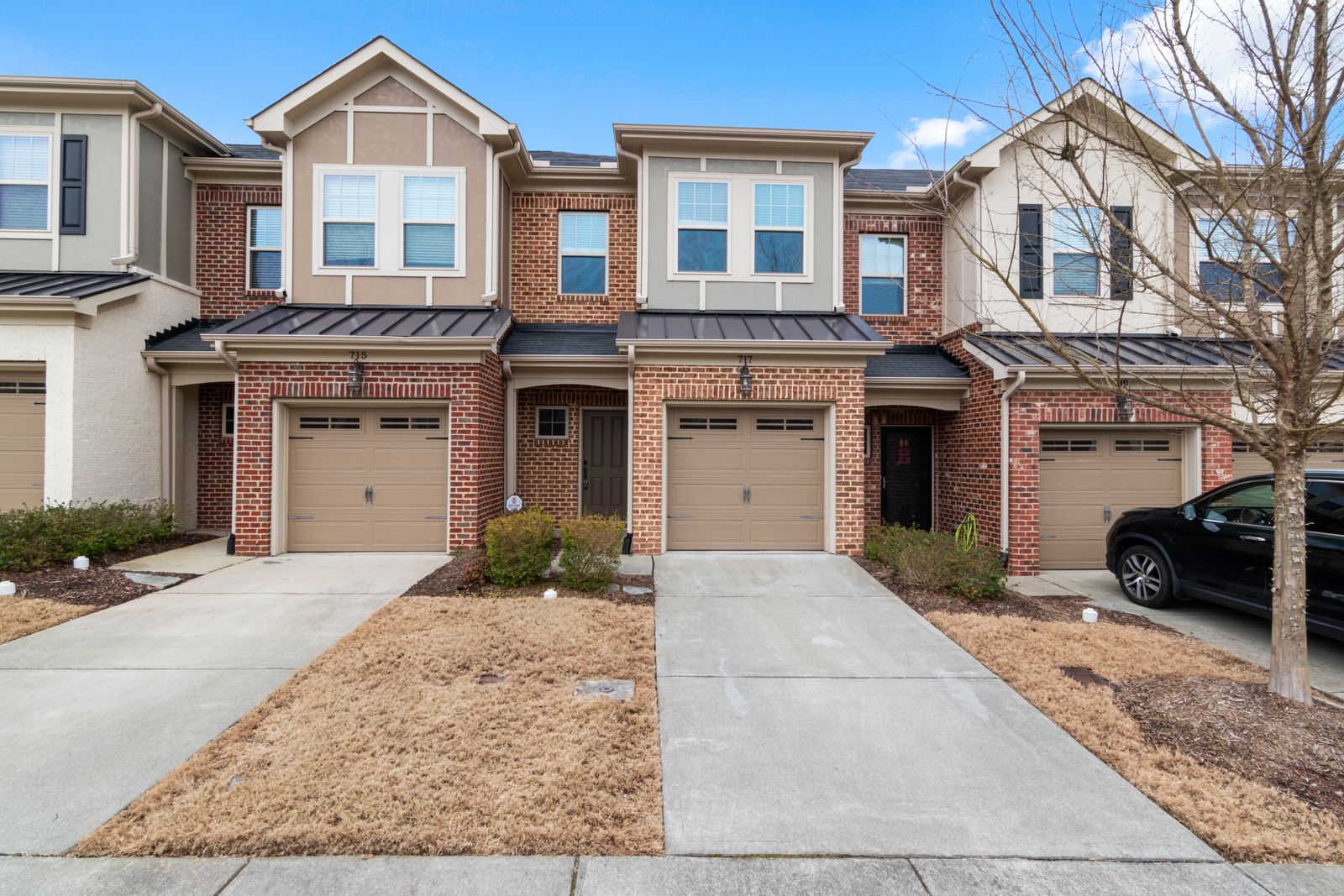
Utah property tax appeal for a rental property — check the exemption before the value
Most Utah landlords have been told the 45% residential exemption is a homeowner benefit they don't get. It isn't, and they usually do. The exemption follows the tenant — and on rental parcels it goes missing quietly, in a year nobody was looking.
Ask a Utah landlord about the residential exemption and the answer comes back fast. That's for owner-occupants. Doesn't apply.
It's the most expensive wrong answer in Utah rental real estate. Under Utah Code §59-2-103, 45% of the fair market value of residential property is exempt from taxation — and residential property is defined by use, not by who holds the deed. A house occupied by a full-time tenant as that tenant's primary residence is residential property. The county assessor's own guidance says so plainly: a residence of a full-time tenant qualifies.
So the first move on a rental tax appeal is not comparable sales. It's the exemption line on the notice. If taxable value sits at or near 100% of market value instead of 55% of it, the exemption isn't on — and getting it turned on is worth more than almost any value argument, on a fraction of the effort.
The exemption follows the tenant, not the owner
Here's the mechanism. Utah's constitution permits counties to exempt 45% of the fair market value of residential property plus up to one acre of land. The statute defines the qualifying use as a primary residence — the place where somebody has established domicile — and the statute does not care whether that somebody pays a mortgage or pays rent. The Utah State Tax Commission's summary of the primary residential exemption and every county assessor's page describe the same rule.
What breaks on a rental is administrative, not legal. An owner-occupied parcel usually picks the exemption up automatically, because the county can match the deed to the mailing address and infer occupancy. On a rental, the county sees an owner whose mailing address is somewhere else — often another city, sometimes another state — and it has no way to know whether there's a tenant inside, a short-term listing, or nobody at all. So the classification gets held, or a declaration gets mailed out and never comes back, and the parcel sits on the roll at full taxable value.
The fix is a residential property declaration filed with the county assessor. Counties run it on their own forms and their own cycle; several mail a declaration and give the owner 90 days from the date of that notice to return it. If a declaration came to a management company or an old mailing address two years ago and nobody recognized what it was, that is very likely where the money went.
The exemption is the largest single lever in Utah property tax math. On a rental it is also the one most likely to be switched off.
Where the exemption genuinely falls off
This is not a loophole, and pretending otherwise gets a landlord in trouble later. Four situations where a rental does not qualify:
- Short-term and transient use. A property rented by the night or the week — the Moab, Park City, and St. George nightly-rental inventory — is not somebody's primary residence, and it is not eligible. Condominiums held in a rental pool are called out specifically. A property that flips between long-term and nightly during the year is a fact question the county will ask about.
- The 183-day rule. Qualifying occupancy has to run 183 or more consecutive days in the calendar year. A unit that turned over three times with gaps between tenants, or one that came out of a renovation in August, may not clear that line for the year in question.
- Vacation homes, cabins, and empty second properties. A cabin in Wasatch County that the family uses eight weekends a year is not a primary residence for anybody. Neither is a house held vacant while the owner decides what to do with it.
- Land beyond one acre. The exemption covers the residence plus up to one acre. On a five-acre parcel with a rented farmhouse, four acres are taxed without it — which is normal, not an error, and not worth an appeal.
One more thing worth saying out loud: a household gets one residential exemption for its own residence, but properties rented to tenants are counted on the tenants' occupancy. An owner with four long-term rentals is not claiming four homestead breaks. Each parcel is qualifying on its own tenant's domicile.
Check which category each parcel is actually in before filing anything. Claiming an exemption a property doesn't earn is a much worse outcome than paying the tax.
Why rental parcels drift high in the first place
Once the exemption is settled, the value question is worth a look — and rentals are structurally more likely to be over-assessed than owner-occupied houses, for one reason that dominates everything else.
County assessors run mass appraisal, under the Standards of Practice published by the State Tax Commission. One office values every parcel in the county on an annual cycle, which means condition is inferred — from the year built, from the last permit pulled, from a drive-by photo, from what similar houses in the neighborhood have been selling for. Nobody goes inside.
On an owner-occupied house that inference is usually close, because owners maintain what they live in. On a rental it drifts, and it drifts in one direction. Tenant-grade finishes get valued as owner-grade finishes. A twenty-year-old kitchen the model assumes was updated in 2019, because the neighbors updated theirs. Carpet on its third tenant. A furnace that's been repaired instead of replaced four times. Deferred exterior work the owner has been putting off precisely because the rent covers the note either way.
Then there's the permit trail, which cuts the wrong way twice. Landlords pull permits for the things that require them and skip inspections on the rest, so a parcel record can carry a finished basement that got roughed in and never completed, or square footage from a plan that changed. A record correction on an overstated basement or an overstated bath count is a factual error, not an opinion about the market — and factual errors are the easiest appeals in Utah to win. Where the disagreement is about square footage specifically, the number that settles it is an ANSI Z765 measurement, available as a standalone measurement engagement rather than a full appraisal.
The assessor priced the house a good tenant would live in. The appeal is about the house that's actually there.
The income approach is evidence — just not the way landlords expect
Every landlord who calls about a tax appeal opens with the rent roll. It's the number they know best, and the instinct is reasonable: if the property throws off $2,100 a month and cap rates in the neighborhood run 5.5%, the math produces a value, and that value is often below the assessor's.
Here's the honest read on how far that gets. On one-to-four-unit residential, a Utah Board of Equalization is comparing your evidence against an assessment that was built from sales comparison. Evidence tends to land hardest when it's denominated in the same currency as the thing it's contradicting. A cap-rate calculation invites a hearing officer to argue about the cap rate — a number the landlord picked, on a property class where published rates are thin and local investors disagree by a hundred basis points. That's a debate about method, and method debates burn a fifteen-minute hearing.
Closed sales of comparable properties in comparable condition don't have that problem. They're facts about transactions, adjusted on a grid, and a board can check them.
Where income data earns its place is as corroboration and as condition evidence. A rent roll showing a unit leases $250 below the submarket is a documented statement about condition, from the market, on a property nobody from the county has entered. Actual operating expenses do the same job. Bring the income data — put it behind the sales, not in front of them. If the property is five units or more, the analysis is genuinely income-driven, and that's commercial work outside a residential certification; the honest answer there is a referral, not a stretch.
Lead with sales. Support with income. Not the other way around.
Running it across more than one parcel
Most Utah landlords who ask about this own between two and six doors, and the portfolio changes the economics in a way single-property advice misses.
Each parcel is its own appeal — its own filing, its own evidence packet, its own decision. But properties in one county share a filing portal, a deadline, and frequently a single hearing date, and the comparable research behind one property in a neighborhood carries most of the way to the next one two streets over. Two appeals in Salt Lake County cost meaningfully less than twice one appeal, in both fee and calendar.
The step that pays for itself is the screening pass, before anything gets filed. Pull each notice, confirm the exemption status parcel by parcel, and run a rough three-comp screen against the assessor's number. The typical result on a five-property portfolio is that two are clearly high, one is arguable, and two are fine. File the two. Skip the rest.
That discipline matters more than it sounds. A landlord who files on everything and shows up with a thin case on four parcels spends the board's goodwill before reaching the parcel that had a real argument. Hearing officers see the same filers year over year, and credibility is cumulative. The ten-minute self-screen is the tool for sorting this before any money is spent, and the per-$1,000 savings math tells you whether the parcel clears the fee.
If you want a read across a portfolio before committing to anything, send the parcel numbers and the assessor's values and you'll get a straight answer on which ones are worth filing.
The access problem, and the calendar
One logistical wrinkle separates a rental appeal from an owner-occupied one: somebody else lives there.
Interior access is what makes the rental case winnable, because the whole argument is usually that condition is worse than the county assumed, and condition is documented from inside. It's also the piece that takes longest to arrange. Utah Code §57-22-4, the Fit Premises Act, requires at least 24 hours' notice to the renter before entry unless the rental agreement provides otherwise, and several Utah cities layer hour-of-day restrictions on top. In practice that means the inspection gets scheduled around a tenant's work week, not around a filing deadline — and a tenant who feels ambushed is a tenant who is unhelpful about letting an appraiser photograph a failing water heater.
Where access truly can't be arranged, the fallback is an exterior-only report supported by whatever interior documentation exists — dated repair invoices, contractor bids, move-out inspection photos, maintenance records. It carries less weight, and it gets disclosed for exactly what it is. Overstating the scope of an inspection is the fastest way to lose an appraiser's credibility and a client's appeal in the same afternoon.
The deadline doesn't flex for any of it. Appeals are due to the county Board of Equalization on or before September 15 under Utah Code §59-2-1004, or 45 days after the valuation notice was mailed, whichever is later. Counting backward on a tenant-occupied property: a week to reach the tenant and agree on a time, the inspection, then a week to ten days for the report. Three weeks, minimum, and August is when it starts — not the second week of September.
Give the tenant notice early and the rest of the calendar takes care of itself.
Frequently asked
Related reading
Start with the document that starts the clock: reading your Utah property valuation notice, line by line across all eight counties — the exemption status is on it. Then the ten-minute self-screen to sort which parcels are worth filing, and how much a Utah BOE appeal actually saves for the per-$1,000 math. If the deadline is close, the September 15 checklist counts the whole process backward from the filing date, and what a Salt Lake County BOE hearing actually looks like covers the room itself. Landlords who bought new-build rentals in the 2021–2024 cycle should also read the new-construction appeal, where the assessment came from a cost schedule instead of the market. Service pages: tax appeal appraisal and house measurement.
The county priced a house it has never been inside, for an owner who has never been asked whether anyone lives there. Both of those are fixable, and one of them is free.
Miner Appraisals is an independent, non-AMC residential appraisal practice in Utah — owner-operated by Dan Miner, Utah Certified Residential Appraiser (Lic. 10948175-CR00). Direct engagement only, signed reports, USPAP-compliant. Property tax appeal, house measurement, estate, and the rest of the full service catalog. Practicing since 2017.