Mobile & manufactured home estate appraisals in Utah — classification comes first
An executor with a manufactured home in the estate usually thinks the hard part is finding comparable sales. It isn't. The hard part is that Utah decides whether the home is real estate or a titled vehicle twice, in two separate statutes, with two answers that are allowed to disagree — and until that's settled, nobody can tell you which kind of appraiser you need.
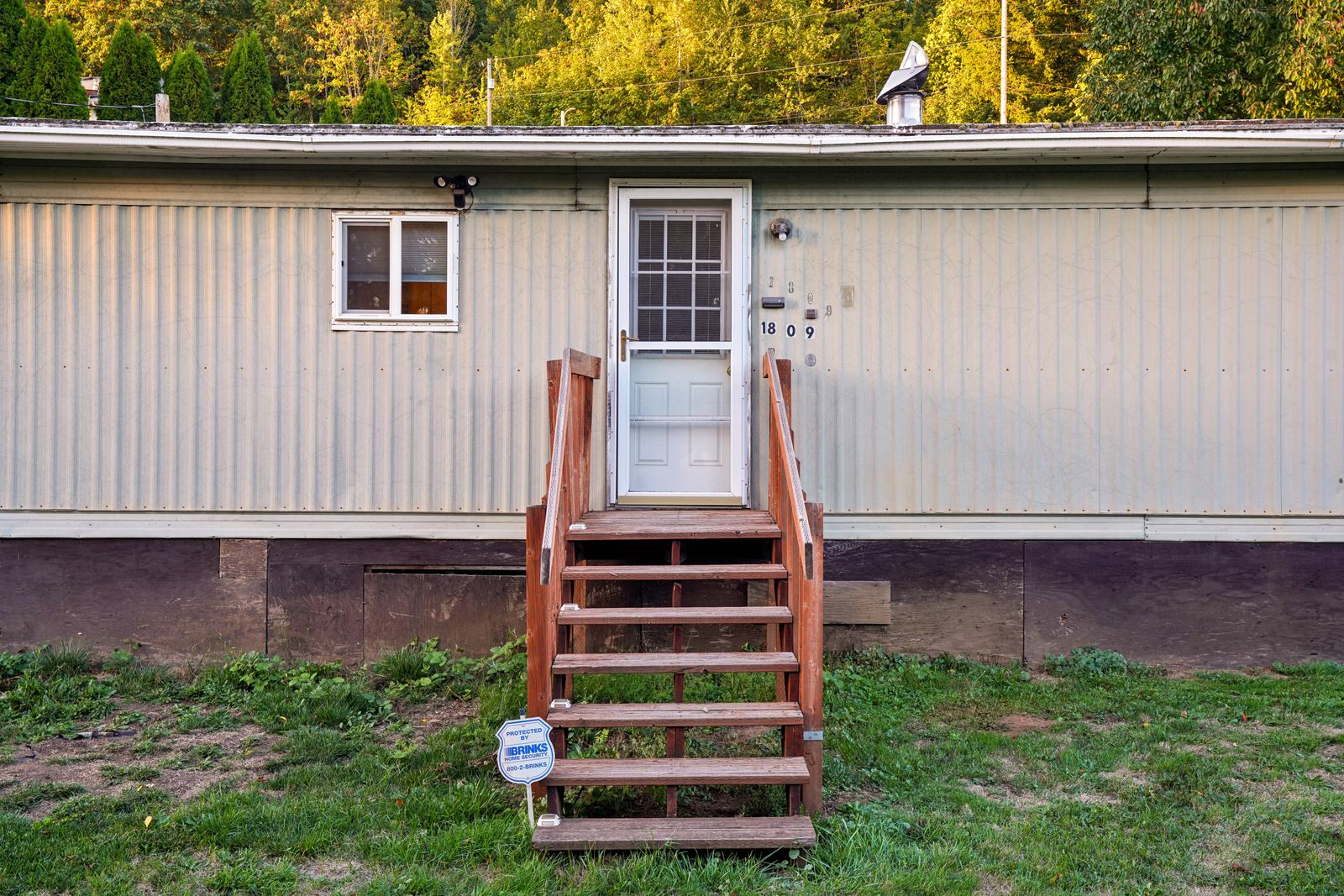
A double-wide on five acres in Tooele County. The personal representative has the death certificate, the letters testamentary, and a county tax notice that lists the home on the real property roll. They call for a date-of-death appraisal expecting the same conversation they'd have about a rambler in Kearns.
It isn't the same conversation. Before anyone can put a number on a manufactured home in a Utah estate, somebody has to answer a question a stick-built house never raises — is this thing real estate at all? — and the tax notice in the executor's hand is not the answer. It's evidence of a different question, answered under a different statute, that Utah law expressly forbids using for this one.
That's the whole subject. The valuation of a manufactured home is ordinary appraisal work once it's underway. The classification upstream of it decides whether a real property appraiser can take the assignment at all, what form the report goes on, what the fee is, and what the executor is supposed to list on the probate inventory. Get it wrong at the front and the error surfaces years later, usually at the worst possible moment — when an heir tries to transfer the home and finds a Motor Vehicle Division title nobody knew existed.
Two documents, two kinds of property
Every manufactured home in Utah starts life as personal property. It leaves the factory with a manufacturer's certificate of origin, gets a title through the Motor Vehicle Division, and is legally closer to a boat trailer than to a house. Utah Code § 70D-2-401(1) says it plainly: except as the section provides, a manufactured or mobile home is considered personal property.
Converting it to real estate takes deliberate paperwork, not the passage of time. Under the same section, the home becomes an improvement to real property only when four things are all true:
- It is permanently affixed to the real property.
- The owner owns the home, and either owns the land it's affixed to or leases that land under financing that meets Freddie Mac, Fannie Mae, or USDA guidelines.
- The certificate of title has been surrendered to the Motor Vehicle Division, which issues a receipt of surrender of ownership documents in exchange.
- An affidavit of affixture and that receipt are recorded with the county recorder.
That last step is the one that matters and the one that gets skipped. A home can be sitting on a poured foundation with a deck and a garage attached to it, plainly permanent to anyone looking at it, and still be personal property in the eyes of the law because nobody ever walked the affidavit into the recorder's office. Statute § 70D-2-401 even supplies the form. Most families have never seen it.
So the first job on a manufactured-home estate assignment is a records search, not a comp search. Pull the recorder's index for the parcel and look for a recorded affidavit of affixture. Check whether the Motor Vehicle Division still shows an active title. The physical evidence in the driveway is suggestive. The recorded document is dispositive.
Utah's two tests disagree — and the statute says so out loud
Here is the part that catches attorneys, let alone executors.
Utah does not run one real-versus-personal test. It runs two, in separate titles, for separate purposes. Title 70D governs ownership, title, and how liens attach. Property tax runs on its own track under Utah Code § 59-2-1503, part of the Transportable Factory-Built Housing Unit Act, which sets out a completely different rule:
- Inside a mobile home park: personal property — unless the owner of the home also owns the ground it sits on.
- Outside a park: personal property — unless the unit is an improvement.
Notice what's absent. No affidavit. No title surrender. No recording requirement. A county assessor can put a manufactured home on the real property roll under § 59-2-1503 while the Motor Vehicle Division still holds a live title on the same structure — and both offices are correct.
And Utah didn't leave this to inference. Subsection 70D-2-401(11) states that the determination of whether a home is real or personal property under that section may not be considered in determining its character for property tax purposes under Title 59, Chapter 2. The firewall is deliberate. The legislature built two tests and then wrote down that they don't talk to each other.
The practical consequence for an estate is direct. A property tax notice showing the home assessed as real property proves the assessor's conclusion and nothing more. It is not evidence of how the asset passes at death, not evidence of what belongs on the probate inventory, and not a substitute for the recorder search. Executors treat the tax notice as proof constantly, because in every other context involving a house, it more or less is.
For a manufactured home, the tax roll is the one document that answers a question nobody asked.
The data plate, the label, and the 1976 line
Assume the classification lands on real property. Now the assignment becomes a manufactured home appraisal, and it carries documentation requirements a site-built house doesn't.
Two identifiers matter. The HUD certification label is a metal plate fixed to the exterior of each section of the home — one on a single-wide, two on a double-wide. The HUD data plate is a paper label inside, usually in a bedroom closet, on the back of a cabinet door, or near the electrical panel, listing the manufacturer, model, serial number, date of manufacture, and the wind and thermal zones the unit was built for. Photographing both is standard on the manufactured home appraisal form, and Fannie Mae's factory-built housing guidance requires evidence of at least one of them on an existing home before a loan is deliverable.
Missing labels are routine on units from the 1980s and 1990s. Siding gets replaced and the exterior plate goes in the dumpster with it; the interior data plate gets painted over or falls off a closet wall. The fix is a label verification letter from the Institute for Building Technology and Safety, which reconstructs the record from HUD's manufactured housing label data using the serial number or the home's original placement address. That letter goes in the file and does the job the plate would have.
Then there's the hard line. Manufactured homes built before June 15, 1976 predate the federal construction and safety standard entirely. There is no HUD label to recover, because there was never one to issue. Those units are ineligible for conventional and FHA financing, which shrinks the buyer pool to cash — and a cash-only buyer pool is a value fact, not a paperwork footnote. When an estate holds a pre-1976 unit, the honest expectation is a number well below what the family has in mind, for reasons that have nothing to do with the home's condition.
Date of manufacture, on this asset class, is a market fundamental. Treat it that way.
The foundation question is a value question
"Permanent foundation" gets used loosely, and the looseness costs money.
Skirting is not a foundation. Neither is a home resting on stacked concrete piers with tie-down straps, which describes a great deal of Utah's older rural manufactured housing. A permanent foundation in the sense lenders and § 70D-2-401 mean is a permanent load-bearing system — footings below the frost line, positive attachment of the chassis, and, where the lender asks for it, a certification signed by a licensed engineer confirming the installation meets HUD's permanent-foundation criteria.
The mechanism connecting that to value is financeability. A manufactured home on a certified permanent foundation, converted to real property, with a recoverable HUD label, is financeable — which means it competes for the ordinary buyer pool. Fail any one of those and the same physical house sells to a narrower, more opportunistic set of buyers at a discount that has nothing to do with square footage or finishes. The appraisal has to reflect the market that actually exists for the property, not the one it would have if the paperwork were clean.
Which is why a foundation certification, if the family has one in the file, is worth producing at the outset. It can move the number.
Why so many appraisers pass on this work
Executors calling around often hear no three or four times before they hear yes, and it isn't personal. The economics are genuinely worse than a site-built assignment.
- The comps are thin. Manufactured homes turn over less often, and a site-built house down the street is not a comparable — it's a different product competing for a different buyer. Building a defensible comp set can mean reaching into neighboring counties and back further in time, which is exactly the kind of expansion that has to be explained and supported in the report.
- Verification takes real hours. Recorder search, Motor Vehicle Division status, label retrieval, foundation documentation. None of it exists on a rambler assignment.
- Measurement is its own problem. Gross living area is measured to the exterior of the finished living space and excludes the towing hitch and any bay window overhang — a detail MLS data routinely gets wrong, in the same way it gets ANSI Z765 square footage wrong on site-built homes. Working from the tax record instead of a fresh measurement is how these reports go bad.
- The geography is the outer counties. Most Utah manufactured housing outside the parks sits in Tooele, Weber, and the rural edges of Utah County — longer drives, thinner data, more work for the same fee.
Miner Appraisals takes this work, with one honest boundary: it has to be real property. When the home is still titled through the Motor Vehicle Division and sitting on rented ground in a park, it is not real estate, and valuing it is personal property appraisal under USPAP Standards 7 and 8 — a separate discipline with separate credentials, covered in full in the note on real estate versus personal property in a Utah estate. A real property appraiser signing that assignment is working outside competency, and a report signed outside competency is worth less than no report when someone examines it.
The right professional depends entirely on the classification. That's the reason to settle it first.
Fee, timeline, and what moves them
A Utah residential estate appraisal generally runs $500 to $800. A manufactured home on land typically lands at the upper end of that band or somewhat above, and the premium tracks the extra work rather than the property type as such — verification hours, comp-set construction, and drive time in the outer counties.
Two things push it further. A retrospective effective date well in the past, which means reconstructing the manufactured-housing market as it stood on the date of death from archived data rather than current activity. And a missing label, since the verification letter takes its own turnaround before the report can close.
On timeline, the baseline is the same one-to-two weeks laid out in the county-by-county turnaround breakdown, with the recorder search and label retrieval running in parallel rather than adding to the end. Where a manufactured home genuinely differs is that a rush is harder to promise — the three-to-five day turn assumes the documentation is already in hand, and on this asset class it frequently isn't.
Ask for the fee in writing before engagement. An executor spends estate funds and answers for the expense to the heirs.
What to have ready before the call
The assignments that go smoothly are the ones where the family did fifteen minutes of looking first:
- The parcel number and the serial or VIN number. The serial number is what unlocks a label verification letter if the plates are gone.
- Whatever the county recorder shows for the parcel. Specifically whether an affidavit of affixture was ever recorded. This single fact routes the entire assignment.
- Any Motor Vehicle Division title, or the knowledge that one exists. A title in a file drawer is the strongest sign the home was never converted.
- The foundation certification, if one was ever obtained. Usually from a refinance or an FHA purchase in the home's history.
- The exact date of death, which fixes the retrospective effective date, and the deadline the report is feeding — the § 75-3-706 three-month inventory clock, an IRS Form 706 filing date, or a closing.
None of it is busywork. Every item is a question that otherwise gets asked mid-assignment, when answering it costs a week.
Frequently asked
Related reading
Manufactured housing is one asset inside a larger administration. The estate & date-of-death hub covers retrospective methodology and the § 75-3-706 inventory clock end to end. For a newly appointed personal representative starting from zero, the executor's guide to Utah date-of-death appraisals walks the full sequence; real estate versus personal property in a Utah estate covers the credential line this post runs into; and what Utah probate judges actually want to see covers the filing itself. Manufactured-housing work concentrates in Tooele, Weber, and rural Utah County, with Salt Lake County parks a distinct and mostly personal-property market.
The comps are findable. The paperwork is what decides the assignment — and on a manufactured home, the paperwork is the property.
Miner Appraisals is an independent, non-AMC residential appraisal practice in Utah — owner-operated by Dan Miner, Utah Certified Residential Appraiser (Lic. 10948175-CR00). Direct engagement only, signed reports, USPAP-compliant, quote within one business day. Estate and date-of-death, tax appeal, PMI, pre-listing, and the rest of the full service catalog. Practicing since 2017.