Estate appraisal of a Utah home in rough shape — hoarding, deferred maintenance, a death in the home
The instinct is to clean the house before the appraiser comes. For a date-of-death value, that runs backward. The appraisal values the house as it stood on the day of death — so cleanup changes what the appraiser can see, not what the house was worth.
Most executors assume the house has to be presentable before the appraiser walks in. Haul out the furniture. Scrub the kitchen. Patch the hole in the hallway drywall, maybe paint. Then call. Nobody wants a stranger seeing the house like this.
That instinct runs backward. An estate appraisal values the house as it stood on the day the owner died. The federal estate tax regulation, Treas. Reg. § 20.2031-1(b), sets fair market value as the price between a willing buyer and a willing seller at the time of the decedent's death, with all relevant facts as of that date considered. The roof that leaked that day leaked. The carpet that had to come out was there. A weekend of cleanup in October doesn't change what the house was worth in June. It changes what the appraiser can see.
So the thesis is this. For a hard house — years of hoarding, decades of deferred maintenance, a death that wasn't discovered right away — the appraisal is only as good as the record of the house's condition on the date of value. The cleanout matters for access and safety. Repairs before the inspection usually hurt the file more than they help it. And a death in the home is a fact to state carefully, not a discount to assume. This post takes each in turn, with a hypothetical Ogden house run through the numbers.
"As is" means as it was on the date of death
An estate appraisal for income-tax basis or a Form 706 carries the date of death as its effective date. That makes it a retrospective appraisal — a value as of a day already past. The condition being valued is the condition on that day, not the condition on the day of the inspection.
In a well-kept house, the gap between those two days barely matters. In a hard house, it can matter a lot. Weeks or months pass. The heat gets shut off and a pipe freezes. A relative pulls the good appliances. Someone starts tearing out the bathroom because it smelled. Each change makes the house in front of the appraiser a little less like the house that existed on the effective date.
The appraiser closes that gap with evidence: dated photos, family accounts, listing photos from years back, invoices, and the parts of the house that don't change in a season — the foundation, the roof age, the original kitchen. Where the report relies on a condition that can't be observed directly, it says so as an extraordinary assumption, disclosed in the report. The clouded-title post covers the difference between an extraordinary assumption and a hypothetical condition, and why the label matters.
The date of value fixes the condition. The inspection only witnesses it.
Condition is a rating — and the comparable sales have to match it
Residential appraisers describe overall condition on a six-step scale, C1 for new construction down to C6. Roughly: a C5 house shows obvious deferred maintenance and needs significant repairs, but it still works as a place to live. A C6 house has damage or defects serious enough to affect safety, soundness, or structural integrity. Most estate homes in rough shape land at C5. A house with an active roof failure, a collapsed sewer line, or unremediated contamination can land at C6.
The rating isn't a label for its own sake. It drives which sales the appraiser can use. Compare a C5 house against renovated C3 sales and the condition adjustment gets so large it swallows the whole analysis — every other adjustment becomes noise next to it. The stronger evidence is other houses that sold in similar condition near the date of death: estate sales, investor purchases, listings marketed as-is or "needs work."
Here's why that matters. A buyer of a fixer doesn't pay the renovated price minus the repair bill. That buyer also prices the risk of what's behind the walls, the months of carrying costs, the time, and a profit for doing the work. A house with safety defects also narrows the buyer pool toward cash and renovation buyers. The as-is market sits below the subtraction, and only sales of houses in similar shape show how far below.
The as-is value comes from what fixer buyers paid. Not from a contractor's bid.
The example — an Ogden bungalow
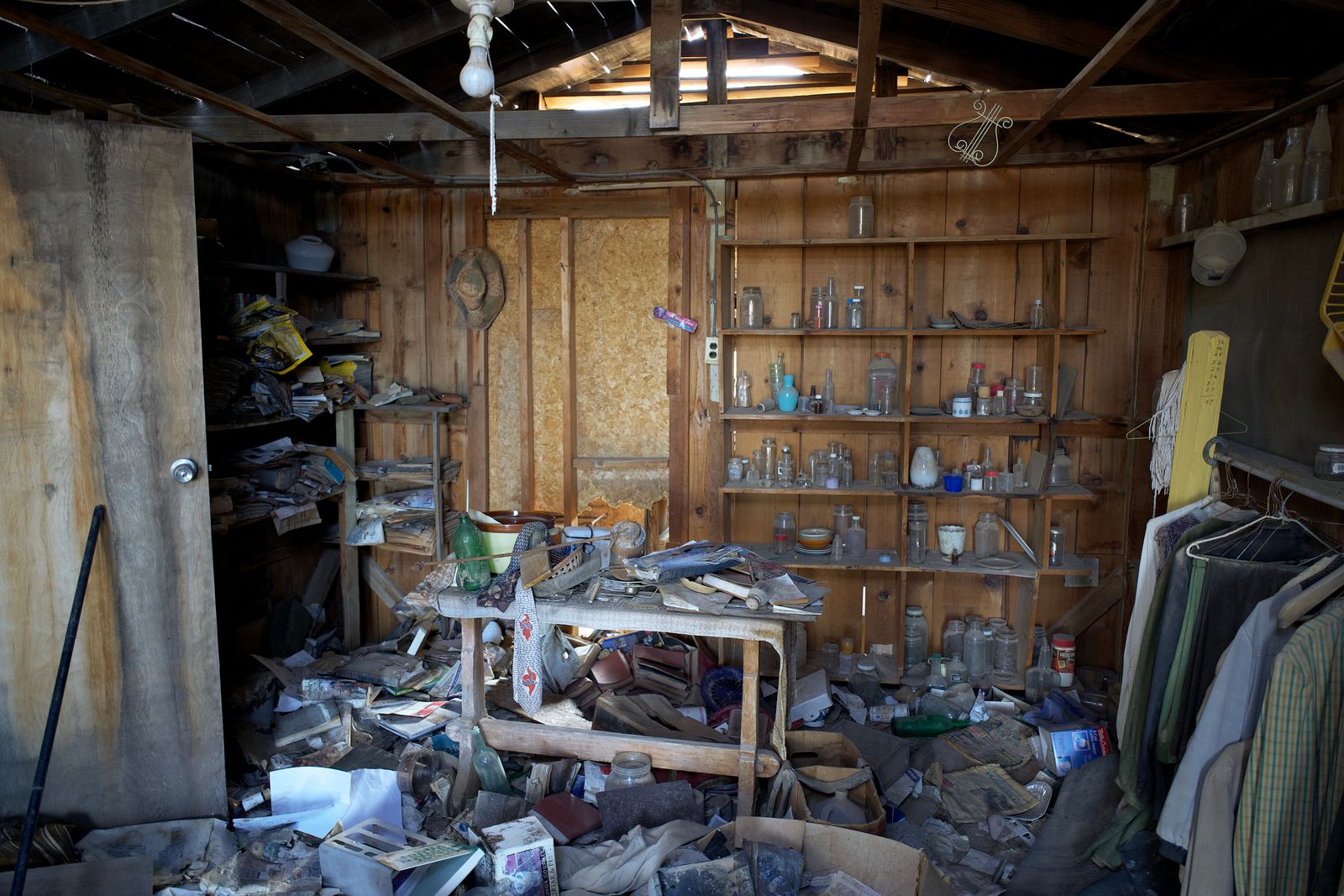
A hypothetical, labelled as one, with round numbers. A father dies in the spring in the 1940s brick bungalow in Ogden, Weber County, that he owned for fifty years. Two decades of deferred maintenance. Rooms stacked waist-high with belongings. One bathroom out of service. A roof at the end of its life and the original electrical panel.
Renovated bungalows on nearby streets sold for around $420,000 that year. A contractor walks through and estimates $70,000 to bring the house up to that standard. The subtraction says $350,000.
The as-is sales say something else. Three similar houses that sold in comparable condition in the months around the date of death closed between $300,000 and $325,000. After adjustments, the appraisal reconciles to $315,000 as of the date of death.
The $35,000 between the subtraction and the market isn't an error. It's the fixer buyer's margin — risk, carrying cost, time, and profit, priced by actual buyers rather than estimated by anyone in the family.
That number becomes the heirs' starting basis. If they sell the house as-is a few months later, a $315,000 basis supported by as-is sales holds up when someone asks where it came from. If they renovate first and sell for $425,000, capital improvements generally add to basis — the CPA tracks that math. Either way, the starting point has to be the market's number, not the family's hope for one or the bid's arithmetic.
Subtraction is a shortcut. The market is the answer.
The cleanout — what it changes and what it doesn't
Start with what's actually being appraised. The belongings in a hoarded house are personal property, not real estate. A real estate appraisal doesn't value them, and a pile of boxes doesn't lower the house's value by itself. If the contents might be worth something — collections, tools, firearms, furniture — that's a separate personal-property appraisal, covered in the real estate vs. personal property post. Sort before anything goes in a dumpster. Hoarded houses hide deeds, account statements, and the occasional envelope of cash.
What the contents do is hide the house. Floors, walls, ceiling stains, cracks in the basement wall, the electrical panel, the furnace, the water heater, the attic hatch. An appraiser can't rate what can't be seen. When whole rooms are unreachable, the report either relies on an assumption about their condition — disclosed, and weaker for it — or the inspection waits until they can be reached.
So the target is access, not appearance. Every room entered. Every mechanical reachable. The attic hatch and the crawlspace or basement clear enough to look.
Repairs are a different matter. A new roof or a gutted bathroom before the inspection erases the evidence of the date-of-death condition, and the appraiser then has to reconstruct a house nobody can see anymore. If something truly can't wait — a leak that's actively damaging the structure — fix it, and keep the before photos and the invoice.
And before anyone carries out the first load, photograph every room. Dated phone photos, taken close to the date of death, are among the best evidence a retrospective appraisal can get.
Clear the paths. Photograph first. Fix nothing the appraiser hasn't seen.
What the inspection won't do
An appraisal inspection has limits, and in a hard house they show. The appraiser doesn't move heavy belongings, doesn't enter a crawlspace or attic that looks structurally unsafe, and doesn't stay in rooms where mold, animal waste, pests, or biohazard make entry unsafe. Those limits are written into the report's scope of work, so anyone reading it knows exactly what was observed and what wasn't.
An appraiser isn't a home inspector either. The furnace doesn't get tested, the sewer line doesn't get scoped, the wiring doesn't get traced. When a known problem drives value — a failed sewer lateral, a cracked foundation, a roof that needs full replacement — send whatever paper exists ahead of the inspection. A plumber's scope report, a contractor's bid, a roofer's estimate. The appraiser weighs it alongside the sales.
The deferred-maintenance tax appeal post covers the same evidence problem from the property tax side — documenting a condition the assessor never saw.
The report is honest about what it saw. That honesty is what makes it usable.
A death in the home
Some estate houses are the place where the owner died, and sometimes the death went undiscovered for a while. Families find this hard to raise. It's worth raising early, because it touches two separate questions — one physical, one about the market.
The physical question is condition. An unattended death can leave flooring, subfloor, and odor damage that needs professional remediation. How that damage is treated relative to the effective date is a scoping question the appraiser settles with the personal representative and the CPA at engagement, and the report states the condition observed and the assumption used. Remediation invoices and before photos belong in the file.
The market question is stigma. Utah addresses disclosure directly. Utah Code § 57-1-37 says the failure to disclose that a property is stigmatized is not a material fact in a real estate transaction, and neither the owner nor the owner's agent is liable for not disclosing it. The definition sits in § 57-1-1(8): the site or suspected site of a homicide, other felony, or suicide; the dwelling of someone with HIV or another disease that can't be transmitted by occupancy; or a former drug site that the local health department has found decontaminated. A natural death isn't on that list. What, if anything, the estate should disclose when it sells is a question for the listing agent and the estate's attorney. It isn't the appraiser's call.
On value, the appraiser doesn't apply a stigma discount by default. If the market reacts to a property's history, the reaction has to show up in evidence — sales of houses with similar histories, longer marketing times, what local agents report from buyers. Where that evidence doesn't exist, there's nothing to measure and nothing to adjust. An elderly owner's natural death in a house held for decades is usually a fact in the history, not a line in the adjustment grid.
State the fact. Measure the market. Assume nothing.
What to send before the inspection
The appraisal of a hard house is built from evidence, and most of that evidence already exists. Send it ahead:
- The date of death, and whether the estate may file a Form 706 — that sets the effective date and the scope.
- Every dated photo from around the date of death or before the cleanout started, including old listing photos if the house was ever marketed.
- A short list of what changed since the death: anything removed, repaired, damaged, or remediated, with invoices where they exist.
- Any inspection or contractor paper — sewer scope, roof estimate, foundation letter, remediation report.
- Access notes: who has the key, whether the power and water are on, pets, and any area the family already knows is unsafe.
Utilities matter more than they sound. A house with no power is a house the appraiser inspects by flashlight. If the executor lives out of state, the out-of-state executor post covers arranging access without a flight.
Most of the file is already in the family's phones.
Frequently asked
Related reading
The Utah date-of-death appraisal guide covers the executor's side of the inventory, and the long-retrospective post covers how condition is reconstructed when the death was years ago. If the heirs will sell the house as-is and want a current number first, the pre-listing appraisal is a separate assignment with a current effective date. Service page: estate & date-of-death appraisals. Family homes across Weber, Salt Lake, Davis and Utah counties.
A hard house isn't a harder appraisal because of the mess. It's harder because the evidence is easy to throw away. Keep it, and the number holds.
Miner Appraisals is an independent, non-AMC residential appraisal practice in Utah — owner-operated by Dan Miner, Utah Certified Residential Appraiser (Lic. 10948175-CR00). Direct engagement only, signed reports, USPAP-compliant, one-to-four-unit residential. Estate & date-of-death, pre-listing, and the rest of the full service catalog. Practicing since 2017.