What a Utah estate appraisal costs — the honest breakdown by property type and county
Most Utah residential estate appraisals run $500 to $800. Where a specific assignment lands inside that band has almost nothing to do with what the house is worth — and everything to do with how many hours the file takes.
By the time an executor asks what an estate appraisal costs, they already have a number in mind. It came off a closing disclosure — the appraisal line on a mortgage they took out four years ago, somewhere in the neighborhood of $600.
Reasonable anchor. Wrong product. That line item was a lender appraisal: current effective date, ordered in volume through an appraisal management company, priced through a bidding process the borrower never saw, and a real slice of what appeared on the statement went to the management company rather than to the person who measured the house. An estate appraisal is a direct engagement, effective as of a date that has already passed, written to be read years later by a probate judge, a CPA, or an examiner who was not in the room.
So here is the honest range. Most Utah residential estate appraisals run $500 to $800. A handful run past $900, and the reasons are predictable enough to list. What decides the number is hours — inspection, drive time, how far back the effective date sits, how thin the comparable sales are. The fee is a labor estimate. Everything below is a breakdown of what adds labor.
The fee is not a percentage of the value
Start here, because it's the assumption underneath most of the confusion.
A $1.6 million house in Deer Valley and a $340,000 bungalow in Ogden can carry nearly the same fee. Sometimes the bungalow costs more — a 1948 house with an unpermitted basement finish, a detached garage of uncertain vintage, and comparable sales that all need condition adjustments is a harder file than a clean luxury build with three recent sales on the same street.
That isn't a pricing preference. USPAP's Ethics Rule makes it unethical for an appraiser to accept an assignment, or to hold a compensation arrangement for one, that is contingent on the amount of the value opinion, on the reporting of a predetermined result, or on a direction in assignment results that favors the client's cause. A percentage-of-value fee is that arrangement, stated out loud. An appraiser who quotes one has disqualified the report before writing a word of it — which matters most in exactly the situation where an executor least wants a weak report, a contested estate.
The mechanism is worth naming: value is the output of the analysis. Pricing the input on the output is backwards, and everyone who reads appraisals professionally knows it.
Value drives the market analysis. It does not drive the invoice.
The range by property type
These are working numbers for a Utah residential estate assignment with a retrospective date-of-death effective date. They assume interior access and a date of death inside the last two or three years.
- Standard single-family, Wasatch Front — $500 to $650. Average condition, a subdivision with turnover, comparable sales within a mile. This is the modal estate assignment and the reason the $500-to-$800 band exists.
- Condo or townhome — $500 to $650. Plat and HOA research adds a step; abundant same-project comparable sales take it right back off. Net effect on the fee is close to zero.
- Rural or acreage — $700 to $900. The driver is comparable-sale scarcity, not the drive. When the nearest defensible sale is nine miles away and closed fourteen months ago, the analysis supporting that stretch is the work.
- Luxury, $1 million and up — $850 to $1,200 and above. Concentrated in Summit and Wasatch County. Thin data at the top of the market, custom features with no obvious market extraction, and seasonal swings that make the effective date matter more than usual.
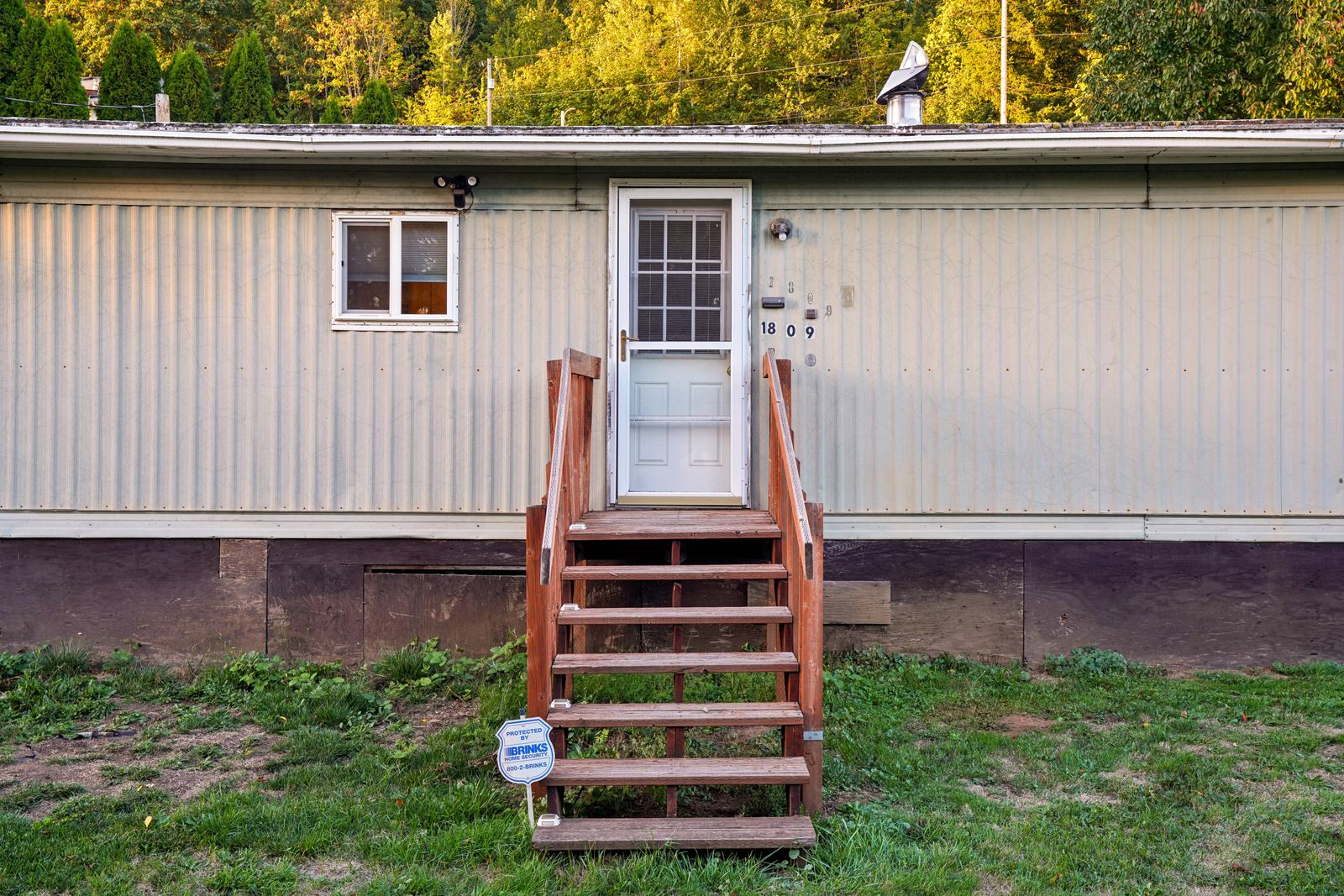
- Manufactured home on land — upper end of the band or above. The verification work is the premium: HUD label retrieval, recorder search for the affidavit of affixture, foundation documentation. Covered at length in the note on manufactured home estate appraisals.
- Two-to-four unit residential — $750 to $1,000. Multiple units to inspect, a rent analysis alongside the sales comparison, and a much smaller pool of comparable properties.
One boundary worth stating plainly: this is a residential practice, one-to-four units. An estate holding a strip center or an office building needs a certified general appraiser, and that is a different quote from a different desk.
Everything else on the list is a variation on the same file. The variation is measured in hours.
What geography actually does to the number
County matters, but not the way most people assume. It isn't a surcharge for being far away. It's comparable-sale density — and drive time as a distant second.
- Salt Lake, Davis, Utah — base band. Dense sales data, short drives, most neighborhoods offering three good comparable sales inside six months. Nearly all $500-to-$650 assignments live here.
- Weber, Tooele, Morgan — modest premium. Ogden and Tooele City proper behave like the base band. The western reaches of Tooele County and rural Morgan do not, and that's where the extra hours show up.
- Summit, Wasatch — premium. Price point, thin comparables, and a resort market whose seasonality means a February effective date and a July effective date are analyzing two different markets.
The pattern holds across the whole service catalog, not just estate work: the counties where an appraisal is cheapest are the counties where the data is richest. The turnaround side of that same geography is broken out in the county-by-county turnaround numbers.
Geography doesn't change the standard. It changes the hours.
The five levers that actually move a quote
Ask an appraiser why one quote came back at $575 and another at $925, and it will be some combination of these.
1. How far back the effective date sits. A death eighteen months ago is nearly free — the appraiser was in that market. A death in 2012 means reconstructing conditions from archived data, verifying decade-old sales against county records, and supporting an analysis of a market nobody can go look at. This is the single biggest lever, and it's the one executors never anticipate.
2. Condition and complexity. Deferred maintenance, partial renovations, unpermitted additions, a basement finish nobody can date. Each one is a condition adjustment that has to be extracted from the market and defended, not estimated by feel.
3. Comparable-sale scarcity. Acreage, a non-conforming property type, a house that's the only one of its kind for two miles. When the search radius has to expand, the report has to explain why — and that explanation is the deliverable.
4. Speed. A three-to-five day turn carries a premium of roughly 25 to 50 percent, because it buys queue position rather than a shorter report. What a rush does and doesn't compress is laid out in the note on rush estate appraisals.
5. A second effective date. Estates electing the alternate valuation date under IRC § 2032 need the property valued twice — date of death and six months later — and that is two analyses, not one report with an extra paragraph. Same math applies when heirs want a current value alongside the date-of-death value to price a sale.
None of these is a surprise once the assignment is scoped. Every one of them is a surprise if nobody asked.
What a flat written quote has to include
"No hidden fees" is easy to say and easy to check. The quote should arrive in writing, before engagement, as a single number — and it should still be that number when the report lands.
What the fee covers on a standard estate assignment: the inspection, the retrospective research, the comparable-sale verification, the written report, and reasonable follow-up questions from the estate's attorney or CPA after delivery. That last item is not a favor. A report that generates a question the appraiser won't answer is a report that isn't finished.
What legitimately costs extra, disclosed up front: a second effective date, an additional report on a second property, and a re-inspection after repairs.
Three things that should end the conversation:
- A fee that changes after the inspection because the appraiser "found more house." Square footage is a scope question, and scope gets settled before the drive out.
- A quote with no engagement letter. The engagement letter is where the intended use, the intended users, and the effective date get fixed. Without it, an executor has bought an unspecified thing.
- Any appraiser who asks what number you need. That question is disqualifying on its own, and it comes up more often in estate work than it should — usually where one heir wants the basis high and another wants the buyout low.
A written flat quote is not a courtesy. It's the first evidence of how the rest of the file will be run.
Who pays, and how the fee is treated
The estate pays. A personal representative who advances the fee personally is entitled to reimbursement from estate assets, because the appraisal is an ordinary cost of administration — it exists to satisfy the inventory requirement under Utah Code § 75-3-706 and to fix the heirs' stepped-up basis. Most executors simply pay from the estate account once it's open.
On the tax side, the fee generally lands as a deductible administration expense — but there's a fork. Under IRC § 2053, reasonable administration expenses are deductible against the gross estate on Schedule J of Form 706. The same expense can instead be taken on the estate's income tax return. It cannot be taken on both: IRC § 642(g) requires the executor to elect one and file a statement waiving the other. Since most Utah estates are nowhere near the federal filing threshold and never produce a Form 706 at all, the income-tax return is usually where it ends up.
That fork belongs to the estate's tax preparer. An appraiser who volunteers an answer to it is out of their lane — the same way a CPA shouldn't be picking comparable sales. Where the two do meet is documentation, and the Form 706 quick reference for Utah CPAs covers what a preparer needs the report to contain.
When the cheap quote is the expensive one
A $350 quote exists. It usually buys a short-form report, a drive-by, or an appraiser who has never written a retrospective assignment and doesn't know what the effective-date disclosure has to say.
That works fine right up until someone reads it. An heir who thinks the number is low. A sibling buying the others out. An IRS examiner comparing a stepped-up basis to a sale that closed nine months later at 30 percent more. In each of those, the report stops being paperwork and becomes evidence — and the qualities that make it hold up are exactly the ones the discount removed: comparable-sale verification, a defended adjustment grid, a retrospective analysis that shows its work.
The probate inventory standard Utah judges actually apply is the practical version of this. A report that reads as a number with a photograph attached does not survive a contested hearing, and the second appraisal always costs more than the first one should have.
Buy the report once. The savings on a bad one are borrowed from a future the executor can't see yet.
Frequently asked
Related reading
Fee is one decision inside an administration with several. The estate & date-of-death hub covers retrospective methodology and the § 75-3-706 inventory clock end to end, and the gift tax & charitable-gift hub covers the lifetime-transfer side, which uses the same qualified-appraisal standard at a different effective date. For a newly appointed personal representative starting from zero, the executor's guide to Utah date-of-death appraisals walks the whole sequence; the county-by-county turnaround numbers cover the calendar side of the same question; and rush estate appraisals covers what buying speed actually gets. Coverage runs across Salt Lake, Davis, Utah, Weber, Summit, Wasatch, Tooele, and Morgan County.
An executor spends estate money and answers to the heirs for every dollar of it. Get the number in writing, understand which of the five levers applies, and the fee stops being the uncertain part of the file.
Miner Appraisals is an independent, non-AMC residential appraisal practice in Utah — owner-operated by Dan Miner, Utah Certified Residential Appraiser (Lic. 10948175-CR00). Direct engagement only, signed reports, USPAP-compliant, flat written quote within one business day. Estate and date-of-death, tax appeal, PMI, pre-listing, and the rest of the full service catalog. Practicing since 2017.