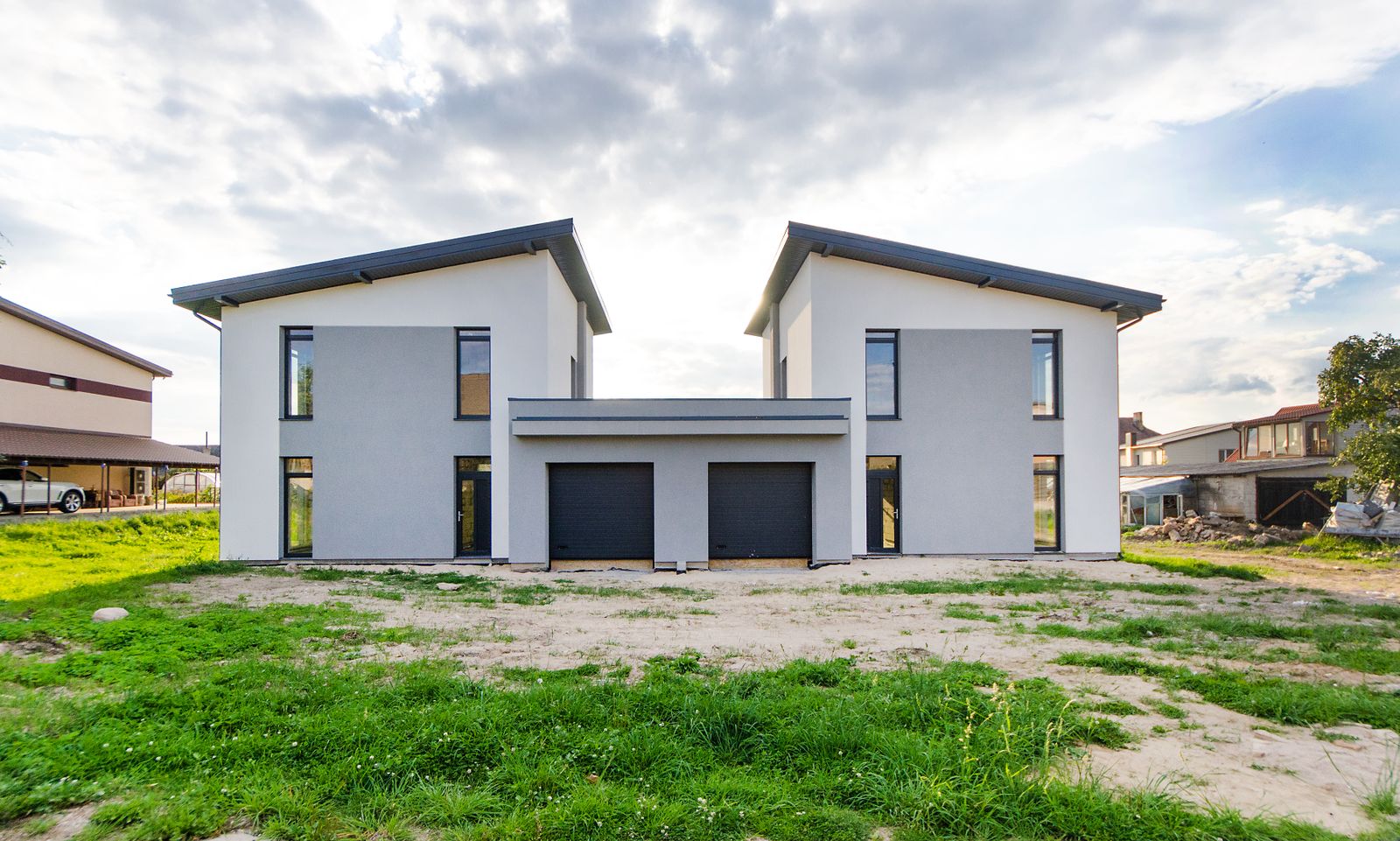
Bankruptcy appraisal for a Utah rental property — the house you don't live in gets almost none of the protection
$6,400 of exemption instead of $53,700. A mortgage that can be crammed down. A tenant who stays through the sale. On a rental, every rule that shields the residence runs the other way — and the appraised value ends up doing all the work.
Most Utah landlords who file assume the rental gets treated like the house — same exemption, same mortgage rules, same appraisal. One more property on the schedules. A second address on the same form. Handled.
It doesn't. A rental sits on the far side of nearly every rule that protects a primary residence in bankruptcy. The homestead exemption drops from $53,700 to $6,400. The rule that stops a Chapter 13 plan from rewriting a home mortgage doesn't reach it. And the tenant doesn't leave just because the landlord filed. Each of those changes cuts in a different direction — one hurts a Chapter 7 filer, one helps a Chapter 13 filer, one changes what the trustee can actually sell.
Which is the thesis. On a primary residence the exemption absorbs a lot of valuation error. On a rental there is almost no exemption to absorb anything, so the appraised value is the case — in Chapter 7 it sets what the trustee can take, in Chapter 13 it sets how much of the mortgage survives. This post covers how that value gets built on a one-to-four-unit rental, two worked examples, and the places the lease quietly moves the number. The usual note: this is the appraiser's half. Which chapter, which date, and what to claim are counsel's calls.
The exemption on a rental is a rounding error
Utah opted out of the federal exemption list under Utah Code § 78B-5-513, so the homestead exemption in § 78B-5-503 is the only one on the table. The big number — $53,700 per individual for 2026 — attaches to a primary personal residence, which subsection (1)(c) defines as the dwelling and up to one acre in which the individual and household reside.
A rental you don't live in isn't that. It falls to the non-primary line, which the State Auditor's 2026 indexed notice sets at $6,400 per individual and $12,800 per household. The full mechanics of the residence exemption — who gets one, who gets two, what shrinks it — are in the homestead exemption post. On a rental, none of that nuance matters much. The number is too small.
Put it against real equity. A duplex in Weber County — Ogden, east bench side, two 2-bed units — appraised at $430,000 with a $310,000 mortgage carries $120,000 of equity. Subtract $6,400 and $113,600 is exposed. The same equity in the filer's own home would have left $66,300 exposed. The $47,300 gap between those numbers is the entire difference between a residence and a rental, and none of it is up for argument.
What is up for argument is the $430,000. The exemption is fixed. The value isn't.
Chapter 7 — the trustee's arithmetic, with nothing to cushion it
A Chapter 7 trustee sells property when the estate nets something for unsecured creditors after the liens, the exemption, and the costs of sale. On the Ogden duplex: $113,600 of nonexempt equity, less roughly 7 percent of $430,000 — about $30,100 — for commissions and closing, leaves the estate something near $83,500 before the trustee's commission under 11 U.S.C. § 326(a). That is not a close call. That duplex gets administered.
Two things follow, and both run through the appraisal.
- The buyback price. A debtor who wants to keep a rental in Chapter 7 usually has to buy the estate's interest back from the trustee — the nonexempt equity net of what a sale would have cost. The trustee's opening number comes from somewhere: a broker's opinion, an online estimate, a listing agent's optimism. A signed appraisal as of the petition date is what the negotiation should start from instead. On this duplex every $10,000 of value moves the buyback price by roughly $9,300.
- The abandonment line. At the other end, § 554 lets a trustee abandon property that is burdensome or of inconsequential value to the estate. An underwater rental — or one within a few thousand dollars of break-even — gets abandoned, and a defensible value is how counsel shows the trustee it isn't worth listing.
One more thing a residence doesn't have: rent. Rents the property generates after the filing are property of the estate under § 541(a)(6), and if the mortgage includes an assignment of rents, the lender will argue they are its cash collateral. That fight is not an appraisal question. It does mean the lease and rent roll belong in the appraiser's file from the first call.
On a residence the exemption softens a high number. On a rental nothing does. The value is the first and last line of defense.
Chapter 13 — the anti-modification rule doesn't reach a rental
Here the rental flips from liability to lever. 11 U.S.C. § 1322(b)(2) lets a Chapter 13 plan modify the rights of secured creditors — "other than a claim secured only by a security interest in real property that is the debtor's principal residence." That carve-out is why a home mortgage can't be crammed down. A rental is not the debtor's principal residence. The carve-out doesn't apply.
So § 506(a) does what it does to any other secured claim: splits it at the collateral's value. Secured up to the appraised value. Unsecured above it.
A worked case. A single-family rental in West Valley City, Salt Lake County, bought near the 2022 peak. Mortgage balance $398,000. Appraised at $365,000. Under § 506(a) the lender holds a $365,000 secured claim and a $33,000 unsecured claim, and the unsecured part gets paid the same cents on the dollar as the credit cards. If there's a second mortgage on the rental — a HELOC used for a remodel — it sits entirely above the value and is wholly unsecured. The same second on the filer's residence could only be stripped if it were wholly underwater, a threshold covered in the cramdown post; on a rental the first can be cut too.
Now move the value to $385,000. The unsecured piece shrinks from $33,000 to $13,000, and $20,000 moves back into the secured claim the plan has to pay in full with interest. The rate on a modified claim — the prime-plus framework the Supreme Court set out in Till v. SCS Credit Corp. (2004) — and the term it has to be paid over are counsel's work. The starting number isn't.
Two cautions. First, an owner-occupied duplex or fourplex — the filer lives in one unit and rents the others — is contested ground. Courts have split on whether a mortgage on that building is "secured only by" the principal residence, and the answer in a given case is a legal question for counsel, not a valuation question. Second, the lender will order its own appraisal. The rental cramdown is the single place in consumer bankruptcy where a residential lender has the most reason to fight the number, because every dollar is a dollar of its secured claim.
In Chapter 7 a low value protects the filer. In Chapter 13 on a rental, a low value restructures the debt. Either way the report has to survive someone paid to disagree with it.
How the value is built on a one-to-four-unit rental
The standard doesn't change. § 522(a)(2) defines value for exemptions as fair market value as of the petition date, and § 506(a)(1) says a secured claim is valued "in light of the purpose of the valuation and of the proposed disposition or use of such property." What changes on a rental is the evidence.
- Sales comparison carries the conclusion. Duplexes sell to duplex buyers — often owner-occupants who live in one side and rent the other — so the comparables are other small multi-unit sales, not the single-family houses across the street. In most Utah submarkets that pool is thin, which is the most common reason a rental appraisal takes longer to support.
- An income approach corroborates it. For one-to-four units that usually means a gross rent multiplier: sale price divided by monthly rent, derived from comparables that were rented when they sold. On the Ogden duplex, market rents of $1,600 and $1,550 total $3,150 a month; at a hypothetical market GRM of 136, the income indication is about $428,400 — close enough to the sales comparison to support it, not to replace it. Fannie Mae's small residential income form (Form 1025) and single-family comparable rent schedule (Form 1007) are the familiar formats for this work.
- Condition gets an interior look. Rentals wear harder than owner-occupied homes — carpet, paint, appliances, deferred turnover repairs. The county's assessed value is a mass-appraisal figure built without anyone going inside, and it is especially blind here. The same point runs through the rental tax-appeal post.
One honest limit. Five units and up is commercial property, and a Utah Certified Residential license stops at four. A fourplex is residential work. A sixplex needs a certified general appraiser.
The approaches are the ordinary ones. The comparables and the interior are where rental reports succeed or fail.
The lease changes what the trustee can actually sell
This is the part most rental valuations in bankruptcy skip. A trustee who sells a tenant-occupied rental doesn't sell an empty building. Under 11 U.S.C. § 365 the trustee can assume or reject the debtor's leases — and even on rejection, § 365(h) lets a tenant in possession keep its rights for the balance of the term. The buyer inherits the tenant.
That makes the interest appraised a real choice. Fee simple values the property as if unencumbered. Leased fee values it subject to the actual lease. A lease at market rent with four months left barely separates the two. A lease at $250 below market with eighteen months to run does: it caps the income an investor can underwrite and takes the property off the table for the owner-occupant buyer who would pay the most — the one who wants to move into one side next month.
Which interest counsel needs depends on what the value is for, and § 506(a)(1)'s "proposed disposition or use" language is the hook. A trustee's sale is a sale subject to the lease. A Chapter 13 debtor keeping the property is keeping it with the tenant in it. Either way, the report should name the interest, say why, and price the lease if it matters — rather than leave opposing counsel to point out that it didn't.
A rental appraisal that ignores the lease is valuing a property nobody is actually selling.
Lien avoidance under § 522(f) — works when it's underwater, fails when it isn't
§ 522(f)(1)(A) lets a debtor avoid a judicial lien to the extent it impairs an exemption, and (f)(2)(A) makes impairment a formula: add the lien, every other lien, and the exemption the debtor could claim with no liens at all. Any excess over value is avoided. On a residence the $53,700 exemption term does a lot of that work. On a rental it's $6,400.
Run the Ogden duplex with a $25,000 collections judgment: $25,000 + $310,000 + $6,400 = $341,400, well under $430,000. No impairment. The judgment survives in full. Run the West Valley rental with an $18,000 judgment: $18,000 + $398,000 + $6,400 = $422,400, which exceeds $365,000 by $57,400 — more than the entire lien. All of it is avoided.
So on a rental, § 522(f) is close to binary. It works when the mortgage already swallows the property and does almost nothing when there is real equity. The appraised value is what tells counsel which side of that line the filing is on.
What the report needs, and when to skip it
Five things make a rental appraisal usable in a bankruptcy: an effective date counsel chooses (the petition date for exemptions and Chapter 7; the date the court will use for a § 506(a) motion); an interior inspection of every unit, coordinated through the lease's entry clause and the tenants' notice; the lease terms and rent roll in the file; a stated interest appraised; and small-income comparables rather than single-family ones.
And the case for not ordering one: if the rental is plainly underwater — mortgage well above any value anyone could argue — the trustee will abandon it and there's nothing for a report to decide in Chapter 7. That answer is free. Send the address, the lien balances, and the lease terms. Most of this work runs through the bankruptcy appraisal service; when the rental is being sold instead of scheduled, a pre-listing appraisal is the same fieldwork aimed at a different reader, and Chapter 7 vs. Chapter 13 covers which chapter asks which question.
On a residence, the exemption forgives a little. On a rental, only the number is left.
Frequently asked
Related reading
The Utah homestead exemption in bankruptcy covers the $53,700 residence exemption this post contrasts against — who gets one, who gets two, and the break-even where a trustee sells. Chapter 13 cramdown and lien-strip appraisals goes deeper on § 506(a) valuation and the wholly-unsecured threshold on a residence. The rental property tax appeal post covers the same property from the county's side. Service pages: bankruptcy appraisals, tax appeal, pre-listing appraisal. Coverage runs across Weber, Salt Lake, Davis and Utah counties.
The residence gets a cushion. The rental gets a number — and whoever supports it better usually wins.
Miner Appraisals is an independent, non-AMC residential appraisal practice in Utah — owner-operated by Dan Miner, Utah Certified Residential Appraiser (Lic. 10948175-CR00). Direct engagement only, signed reports, USPAP-compliant, one-to-four-unit residential. Bankruptcy, tax appeal, and the rest of the full service catalog. Practicing since 2017.