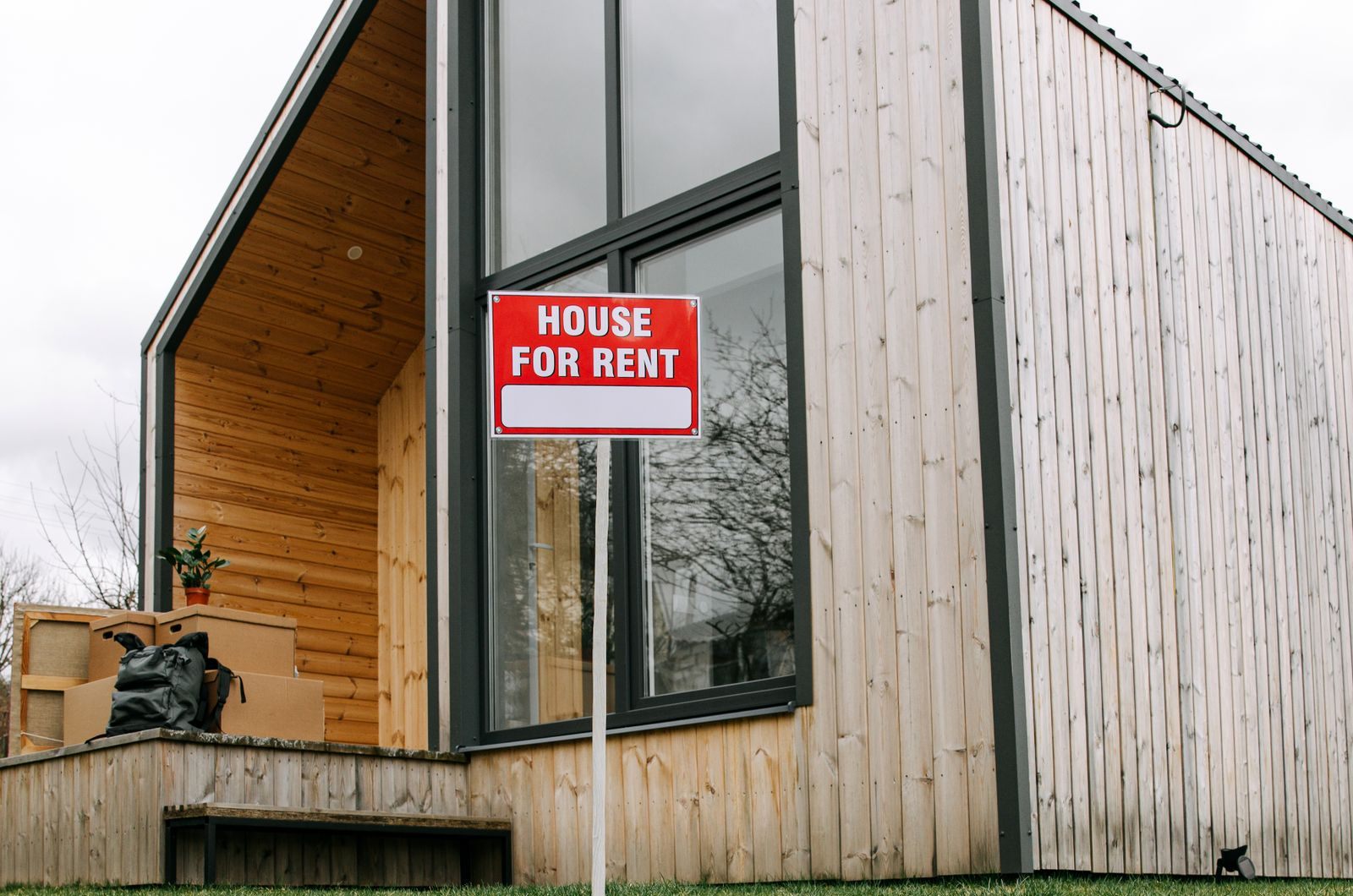
Inherited a Utah house — sell, keep, or rent: what the date-of-death appraisal decides
Heirs treat the sell-or-keep question as a family decision and the appraisal as probate paperwork. It's one conversation. The date-of-death value is the basis under every path the house can take — and on a rental, it has to be two numbers, not one.
Most heirs treat two things as separate conversations. Whether to sell, keep, or rent the house is a family decision, held around a kitchen table. The appraisal is paperwork for the probate file. One talk with the siblings, one with the court.
They're the same conversation. The date-of-death value becomes the heir's income-tax basis under IRC § 1014 — and that one number sits underneath every path the house can take. Sell it this year, and basis decides whether there's a gain at all. Move in, and basis decides how much of a later gain the home-sale exclusion has to cover. Rent it out, and basis — split between the land and the building — sets the depreciation deduction for the next 27.5 years and the recapture bill when the rental finally sells.
So the thesis is this. The appraisal isn't a cost of closing the estate. It's the first input to whatever the heirs decide next. This post runs one hypothetical Utah house through all three paths, shows where the number does its work on each, and marks the line where the appraiser's job ends and the CPA's begins. The step-up basis post covers the § 1014 mechanic itself. This one is about what happens after.
Three rules, one number
Under § 1014(a)(1), property acquired from a decedent takes a basis equal to its fair market value on the date of death. The IRS restates it in Publication 523: for an inherited home, the basis is the fair market value on the date of the decedent's death — or, if a Form 706 was filed or required, the value on that return. Whatever the parents paid in 1986 drops out of the math. Decades of appreciation are never taxed to anyone.
Two more rules travel with it. The first is the holding period. Under § 1223(9), an heir who sells property with a § 1014 basis within a year of the death is treated as having held it for more than one year. Any gain on an inherited house is long-term, even if it sells in month four.
The second is the rule nobody expects. The home-sale exclusion in § 121 requires the seller to have owned and used the house as a principal residence for two of the five years before the sale. A child doesn't inherit the parent's years in the house. Only a surviving spouse can count the late spouse's ownership and use, under § 121(d)(2). Everyone else starts the two-year clock on the day they move in — if they move in at all.
Basis, holding period, residence test. Those are the whole board. The appraised value is the piece that moves across it.
The example — a Layton rambler
A hypothetical, labelled as one, with round numbers. A mother dies in March owning a 1970s rambler in Layton, Davis County, bought in 1986 for $92,000. Her only daughter inherits it. The retrospective date-of-death appraisal comes in at $480,000. The report also states a site value — what the land alone was worth on the same date — of $150,000, leaving $330,000 attributable to the house and the other improvements.
For contrast, the county's market value on that year's tax notice is $440,000. That figure isn't careless. It's a mass-appraisal number set as of January 1, built to put every parcel on the roll, usually without anyone walking inside. It was made for a different job, on a different date.
Three versions of what the daughter does next. Same house. Same basis. Different math.
Path one — sell soon
She lists the house that summer. It sells for $505,000. Commissions, title, and closing costs come to $30,000 — a hypothetical figure for illustration, not a quote of any brokerage's rate. Amount realized: $475,000. Basis: $480,000.
There's no gain to tax. There's a paper loss of about $5,000, and whether that loss is deductible depends on how the house was held after the death. Publication 523 is blunt that a loss on the sale of your own home isn't deductible; an heir who never lived there and sold it promptly sits in a different spot. That fork belongs to the CPA.
Now run the same sale without an appraisal. The family uses the county's $440,000 because it was printed on the tax notice. Reported gain: $35,000. Long-term, taxed at the 0, 15, or 20 percent federal rates depending on income (IRS Topic 409), plus Utah income tax on top. That's tax paid on appreciation that never happened — the house was worth $480,000 the day she died.
The opposite error costs money too, just later. A basis that's padded with someone's optimistic online estimate or an old listing price produces a loss that won't survive a question. A signed, retrospective, USPAP-compliant report is the thing that answers the question when it comes.
On a quick sale, the appraisal has one job: prove there was no gain.
Path two — she moves in
Instead of selling, the daughter moves in that fall and makes it her home. Her basis is still $480,000. Four years later she sells for $560,000, with $34,000 in costs. Gain: $526,000 minus $480,000, or $46,000.
By then she has owned and lived in the house as her principal residence for well over two of the last five years. Section 121 excludes up to $250,000 of gain for a single filer — $500,000 for a married couple filing jointly who both meet the use test. Tax on the $46,000: none.
So why does the appraisal matter on this path? Timing. Plans change. A job transfer eighteen months in means she hasn't met the two-year test, and the full exclusion is off the table. The statute carves out a partial exclusion for specific circumstances, and whether hers qualifies is the CPA's call. If it doesn't, the gain is taxable — and the date-of-death basis is the only thing standing between her and a larger bill. A $480,000 basis against a $560,000 sale is a manageable number. A $440,000 basis is a worse one.
There's a property-tax wrinkle here as well. Once she occupies the house as her primary residence, Utah's 45 percent residential exemption should apply — but a deed transfer is one of the ways it silently falls off the county's records. The residential exemption post covers how to check that it attached.
On the move-in path, the appraisal is insurance for the year the plan changes.
Path three — keep it as a rental
This is the path where the number works hardest, because it has to become two numbers.
Residential rental property is depreciated over 27.5 years, and land isn't depreciable at all. Publication 527 says so plainly: land generally doesn't wear out, become obsolete, or get used up. So the $480,000 basis has to be divided. With the appraisal's site value, the building share is $330,000, and straight-line depreciation runs about $12,000 a year — a little less in the first year under the mid-month convention.
Without a site value, Publication 527 lets an owner who can't determine the fair market values divide the basis by the land-to-building ratio on the property tax assessment. Suppose the county's split on this parcel is 40 percent land. Building share: $288,000. Depreciation: about $10,470 a year. That's roughly $1,530 a year in deductions left on the table — every year the house is rented — because nobody asked for a land value while the appraiser was already in the file. A mass-appraisal ratio describes the neighborhood. A site value describes the lot.
Then comes the other side of depreciation. Each year's deduction lowers the adjusted basis, and Publication 527 says the basis drops by the full amount that could have been deducted even if it wasn't claimed. Rent the house five years and take about $60,000 of depreciation. Sell for $600,000 with $36,000 of costs. Adjusted basis: $420,000. Amount realized: $564,000. Gain: $144,000.
The $60,000 that came from depreciation is unrecaptured section 1250 gain, taxed at a maximum 25 percent rate. The remaining $84,000 is ordinary long-term capital gain. And because nobody lived there, § 121 doesn't touch any of it. The appraisal can't change that structure. It sets the starting basis and the split that every line above depends on.
One more Utah note. A long-term rental with a full-time tenant still qualifies for the 45 percent residential exemption. A house sitting empty while the family decides does not.
On a rental, the appraisal isn't one number. It's two — and the second one shows up on every return.
What to ask for when ordering the appraisal
The practical move is to say what the house might become in the first email, before anything is decided. Four asks cover nearly every case:
- A separately stated site value, if renting is on the table at all. It costs little to include at the start and requires reopening the file to add later.
- The date of death as the effective date — and if the estate is filing a Form 706 and considering the six-month alternate valuation date, say so up front so both dates are scoped together.
- The intended users named — the personal representative, the heir who will hold the house, and the CPA — so the people who need to rely on the report can.
- A second effective date if the house will be used personally first. When a home goes from personal use to rental, Publication 527 sets the depreciation basis at the lesser of adjusted basis or fair market value on the date of the change. If the market has moved by then, the CPA may need that second number. It's a small add when the comparable sales are already pulled.
If more than one heir is involved and one wants to keep the house, the math changes again — shares bought from siblings carry what was paid for them, not the date-of-death value. The sibling buyout post covers that fork.
Keep the report for as long as anyone owns the house, plus the years after the sale. The CPA who needs it may not be the one who files this year's return.
One sentence in the first email saves a second engagement later.
Where the appraiser's job stops
The appraiser supplies the value as of the date of death, the site value if requested, and any second effective date the plan calls for — all in a signed report under USPAP. That's the whole scope. The depreciation schedule, the basis adjustments, whether a loss is deductible, whether a partial § 121 exclusion applies, and the Utah return are the CPA's work. How the estate distributes the house is the personal representative's decision, with counsel. None of that is a disclaimer. It's the division of labor that makes each piece hold up.
The appraisal doesn't decide whether to sell. It decides what each choice costs.
Frequently asked
Related reading
The IRC § 1014 step-up basis post covers why the date-of-death number matters even when no estate tax is due, and Utah date-of-death appraisals covers the executor's side of the inventory. For a house that will be sold, the pre-listing appraisal is a separate assignment with a current effective date. Service page: estate & date-of-death appraisals. Family homes across Davis, Salt Lake, Weber and Utah counties.
Sell, keep, or rent, the heir is building on the same foundation. Pour it once, pour it right, and every path after it gets cheaper.
Miner Appraisals is an independent, non-AMC residential appraisal practice in Utah — owner-operated by Dan Miner, Utah Certified Residential Appraiser (Lic. 10948175-CR00). Direct engagement only, signed reports, USPAP-compliant, one-to-four-unit residential. Estate & date-of-death, pre-listing, and the rest of the full service catalog. Practicing since 2017.